
Beginning with Electronic Medical Records (EMR) vs EHR, the narrative unfolds in a compelling and distinctive manner, drawing readers into a story that promises to be both engaging and uniquely memorable.
In the realm of healthcare, the comparison between Electronic Medical Records (EMR) and Electronic Health Records (EHR) is crucial for understanding the evolution of patient care and healthcare efficiency. Let’s delve into the differences, impact, and usage of these two essential components.
Electronic Medical Records (EMR) vs EHR
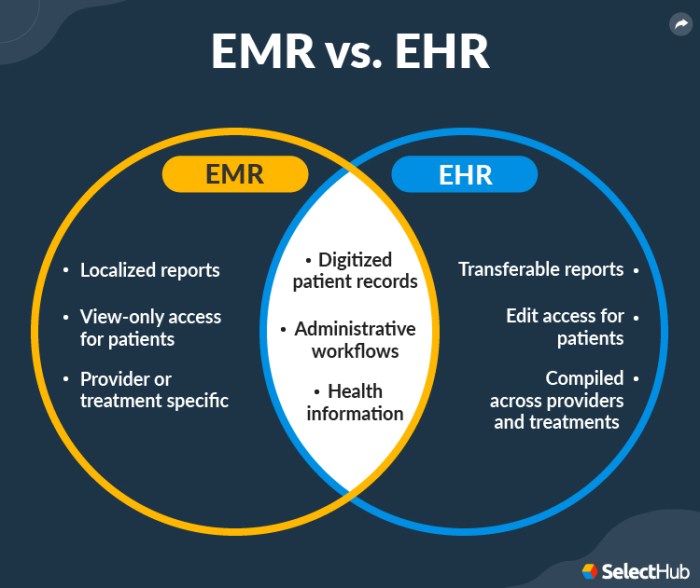
Electronic Medical Records (EMRs) and Electronic Health Records (EHRs) are both digital versions of a patient’s paper chart. However, there are key differences between the two systems that impact how they are used in healthcare settings and their overall impact on patient care and healthcare efficiency.
Key Differences
- EMRs are primarily used by healthcare providers for diagnosis and treatment within a single healthcare organization. They contain medical and treatment histories of patients.
- EHRs, on the other hand, are designed to be shared across multiple healthcare organizations. They include a broader view of a patient’s health information, including medical history, diagnoses, medications, treatment plans, immunization dates, allergies, radiology images, and laboratory test results.
- EMRs are more limited in scope and are focused on the clinical aspects of a patient’s care within a specific healthcare provider’s setting.
- EHRs offer a more comprehensive view of a patient’s health information and can be shared securely among multiple healthcare providers, improving coordination of care and patient outcomes.
Examples of Use in Healthcare Settings
- An EMR may be used by a primary care physician to record patient visits, treatment plans, and medication prescriptions.
- An EHR can be accessed by specialists, hospitals, labs, and other healthcare providers involved in a patient’s care to view a complete medical history, test results, and treatment plans.
Impact of Transitioning from EMRs to EHRs
- The transition from EMRs to EHRs can lead to improved patient care through better coordination among healthcare providers and access to comprehensive health information.
- EHRs can enhance healthcare efficiency by reducing duplicate tests, improving communication among providers, and streamlining administrative tasks.
- Patient engagement and empowerment can increase as individuals have easier access to their health information and can participate more actively in their care.
Healthcare Access
Electronic Medical Records (EMRs) and Electronic Health Records (EHRs) play a crucial role in improving healthcare access by streamlining information sharing and communication among healthcare providers. This enhanced coordination leads to more efficient and effective care delivery for patients.
Improved Communication and Coordination
The implementation of EMRs or EHRs enables healthcare providers to access patient records instantly, regardless of location. This accessibility eliminates the need for physical paperwork transfer, reducing delays in care and allowing for quicker decision-making. For example, in emergency situations, having immediate access to a patient’s medical history can be life-saving.
Telemedicine and Remote Monitoring
EMRs and EHRs facilitate telemedicine services and remote monitoring, especially beneficial for underserved populations in rural areas. Patients can now consult with healthcare providers virtually, reducing the barriers of distance and transportation. This virtual care option enhances healthcare access for individuals who may have limited mobility or live in remote regions without easy access to healthcare facilities.
Healthcare Costs
Electronic Medical Records (EMRs) and Electronic Health Records (EHRs) have the potential to impact healthcare costs significantly. Let’s delve into how these digital systems can affect the financial aspect of healthcare facilities and patients.
Cost Implications of EMRs vs EHRs
- EMRs typically focus on the medical history of patients within one healthcare organization, while EHRs provide a more comprehensive view of a patient’s health information across multiple healthcare providers. The initial cost of implementing EHRs is usually higher due to the need for interoperability among different systems.
- However, in the long run, EHRs can lead to cost savings by reducing duplicate tests, minimizing medical errors, and improving overall efficiency in healthcare delivery. This can result in lower healthcare costs for both providers and patients.
- On the other hand, EMRs, although more limited in scope, can still streamline internal processes within a single healthcare facility, leading to some cost savings. EMRs are generally more affordable to implement compared to EHRs, making them a more feasible option for smaller healthcare practices.
Healthcare Providers
Healthcare providers play a crucial role in utilizing Electronic Medical Records (EMRs) and Electronic Health Records (EHRs) to enhance patient care and streamline processes.
Streamlining Workflows
- EMRs and EHRs can streamline workflows for healthcare providers by centralizing patient information in one electronic system, reducing the need for paper records and manual data entry.
- Providers can easily access patient records, lab results, medication history, and treatment plans in real-time, leading to faster decision-making and improved patient outcomes.
- Automation of tasks such as appointment scheduling, prescription refills, and billing can save time and allow healthcare providers to focus more on patient care.
Improved Communication and Collaboration
- EMRs and EHRs facilitate better communication and collaboration among healthcare teams by enabling secure sharing of patient information across different departments and locations.
- Healthcare providers can quickly communicate with specialists, nurses, and other team members through the electronic system, ensuring coordinated care and reducing errors.
- Features like instant messaging, alerts for critical results, and electronic referrals enhance teamwork and promote a more efficient healthcare delivery process.
Health Insurance
Electronic Medical Records (EMRs) and Electronic Health Records (EHRs) have significantly impacted the relationship between healthcare providers and health insurance companies. These digital records have revolutionized the way health insurance claims are processed, leading to more efficient reimbursements and influencing insurance policies and coverage decisions.
Impact on Processing Health Insurance Claims
EMRs and EHRs have streamlined the process of processing health insurance claims by providing insurers with quick access to accurate and up-to-date patient information. This digital documentation reduces errors, minimizes paperwork, and speeds up the approval and reimbursement process, benefiting both healthcare providers and insurance companies.
Influence on Health Insurance Policies and Coverage Decisions
The use of EMRs and EHRs has influenced health insurance policies and coverage decisions by enabling insurers to assess the quality and efficiency of care provided by healthcare providers. Insurers can analyze data from these records to determine the effectiveness of treatments, identify cost-saving opportunities, and tailor coverage options based on individual patient needs. For example, insurers may offer incentives to providers who demonstrate high-quality care and positive patient outcomes recorded in EMRs or EHRs.
Health Policies
Electronic Medical Records (EMRs) and Electronic Health Records (EHRs) play a crucial role in shaping healthcare policies by providing valuable data and insights for policymakers to make informed decisions. These digital records help streamline processes, improve patient care, and enhance overall healthcare quality.
Impact on Healthcare Regulations
EMRs and EHRs compliance requirements have a direct influence on healthcare regulations and policies. The implementation of these systems ensures that patient data is securely stored, shared, and accessed according to strict guidelines and standards set by regulatory bodies. This, in turn, helps in maintaining data privacy, security, and interoperability across different healthcare settings.
- EMRs and EHRs compliance requirements help in standardizing the documentation and exchange of patient information, leading to improved care coordination and communication among healthcare providers.
- These systems also assist in reducing medical errors, enhancing patient safety, and ensuring accurate billing and coding practices, which are essential aspects of healthcare regulations.
- By adhering to EMRs and EHRs compliance standards, healthcare organizations can avoid penalties, audits, and legal issues, thus promoting regulatory compliance and accountability in the healthcare industry.
Contribution to Healthcare Legislation
EMRs and EHRs contribute significantly to the development of healthcare legislation by providing real-time data, analytics, and insights into patient outcomes, population health trends, and healthcare utilization patterns. This data-driven approach helps policymakers in designing effective healthcare policies that address current challenges and improve healthcare delivery.
- EMRs and EHRs enable policymakers to track public health trends, disease outbreaks, and healthcare disparities, allowing for timely interventions and targeted healthcare programs to improve population health outcomes.
- These systems also support evidence-based decision-making by offering comprehensive patient data, clinical guidelines, and best practices that inform the development of healthcare laws and regulations.
- Furthermore, EMRs and EHRs facilitate research, quality improvement initiatives, and performance measurement activities that drive policy changes, investments in healthcare infrastructure, and the advancement of healthcare services for the benefit of the population.
Health Records
Maintaining accurate and secure Electronic Medical Records (EMRs) and Electronic Health Records (EHRs) is crucial in the healthcare industry. These records contain vital information about a patient’s medical history, treatments, medications, and test results, which can significantly impact their care and treatment decisions.
Importance of Maintaining Accurate and Secure EMRs and EHRs
- Accurate and up-to-date health records ensure that healthcare providers have access to the necessary information to make informed decisions about a patient’s care.
- Secure health records protect sensitive patient data from unauthorized access, reducing the risk of identity theft, fraud, or breaches that could compromise patient privacy.
- EMRs and EHRs help streamline communication between healthcare providers, improving coordination of care and reducing medical errors.
Security Measures for Protecting Health Records
- Encryption: Data in EMRs and EHRs is often encrypted to prevent unauthorized access.
- Access Controls: Healthcare facilities implement strict access controls to ensure that only authorized personnel can view or modify patient records.
- Regular Audits: Regular audits are conducted to monitor who has accessed patient records and to detect any suspicious activity.
Improving Organization and Accessibility of Health Records
- Centralized Information: EMRs and EHRs centralize patient information, making it easier for healthcare providers to access and update records from various locations.
- Patient Portals: Many healthcare facilities offer patient portals that allow individuals to view their own health records, schedule appointments, and communicate with their healthcare providers.
- Interoperability: Improved interoperability between different healthcare systems allows for seamless sharing of health records between providers, ensuring continuity of care.
Health Screening
Electronic Medical Records (EMRs) and Electronic Health Records (EHRs) play a crucial role in facilitating health screening processes by providing healthcare providers with easy access to patients’ medical history, test results, and screenings.
Tracking and Monitoring Health Screenings
EMRs and EHRs enable healthcare providers to track and monitor health screenings for individuals more efficiently. By storing all relevant information in a digital format, providers can easily review past screenings, schedule future ones, and ensure that patients are up to date with their preventive care.
- EMRs and EHRs can send automated reminders to patients for upcoming screenings, reducing the risk of missed appointments and ensuring timely follow-ups.
- Providers can quickly identify any gaps in a patient’s screening history and take necessary actions to address them, leading to more comprehensive and personalized care.
- Healthcare teams can collaborate more effectively by sharing screening results and recommendations in real-time through electronic records, improving coordination of care and decision-making.
Enhanced Accuracy and Timeliness
EMRs and EHRs have significantly enhanced the accuracy and timeliness of health screening results by eliminating the need for manual data entry, reducing transcription errors, and streamlining the communication process between healthcare providers and patients.
With electronic records, healthcare providers can access and update screening results instantly, allowing for quicker analysis, interpretation, and decision-making.
- Electronic records enable the integration of screening data with other health information, providing a comprehensive view of a patient’s overall health status and risk factors.
- EMRs and EHRs can generate reports and analytics on health screening trends, outcomes, and adherence rates, helping providers identify areas for improvement and implement targeted interventions.
- Patients can also access their screening results online, empowering them to take an active role in their healthcare and make informed decisions about their preventive care.
In conclusion, the discussion around Electronic Medical Records (EMR) and Electronic Health Records (EHR) sheds light on the intricate details that shape modern healthcare practices. From improved accessibility to streamlined workflows, the journey from EMRs to EHRs signifies a pivotal shift towards enhanced patient care and efficient healthcare delivery.
FAQ Corner
What are the key differences between EMR and EHR?
EMRs focus on individual patient records within a healthcare provider’s network, while EHRs contain a more comprehensive view of a patient’s medical history across different providers.
How do EMRs and EHRs impact healthcare costs?
EMRs can lead to short-term cost increases due to implementation, but EHRs offer long-term cost savings through improved efficiency and coordination of care.
What role do healthcare providers play in utilizing EMRs and EHRs?
Healthcare providers use EMRs and EHRs to document patient encounters, streamline workflows, and enhance communication among care teams.
How do EMRs and EHRs influence health insurance companies?
EMRs and EHRs impact health insurance claims processing by providing accurate and timely information for reimbursement, leading to more efficient operations for insurers.


